Four students maximum
The group is small enough for instructors to know each student's habits and large enough for genuine mathematical discussion to emerge.
Programmes
Our small-group lessons are designed to keep the intellectual advantages of a live class without losing individual attention. Students think independently, but they also learn from seeing how others question, explain, and revise ideas.
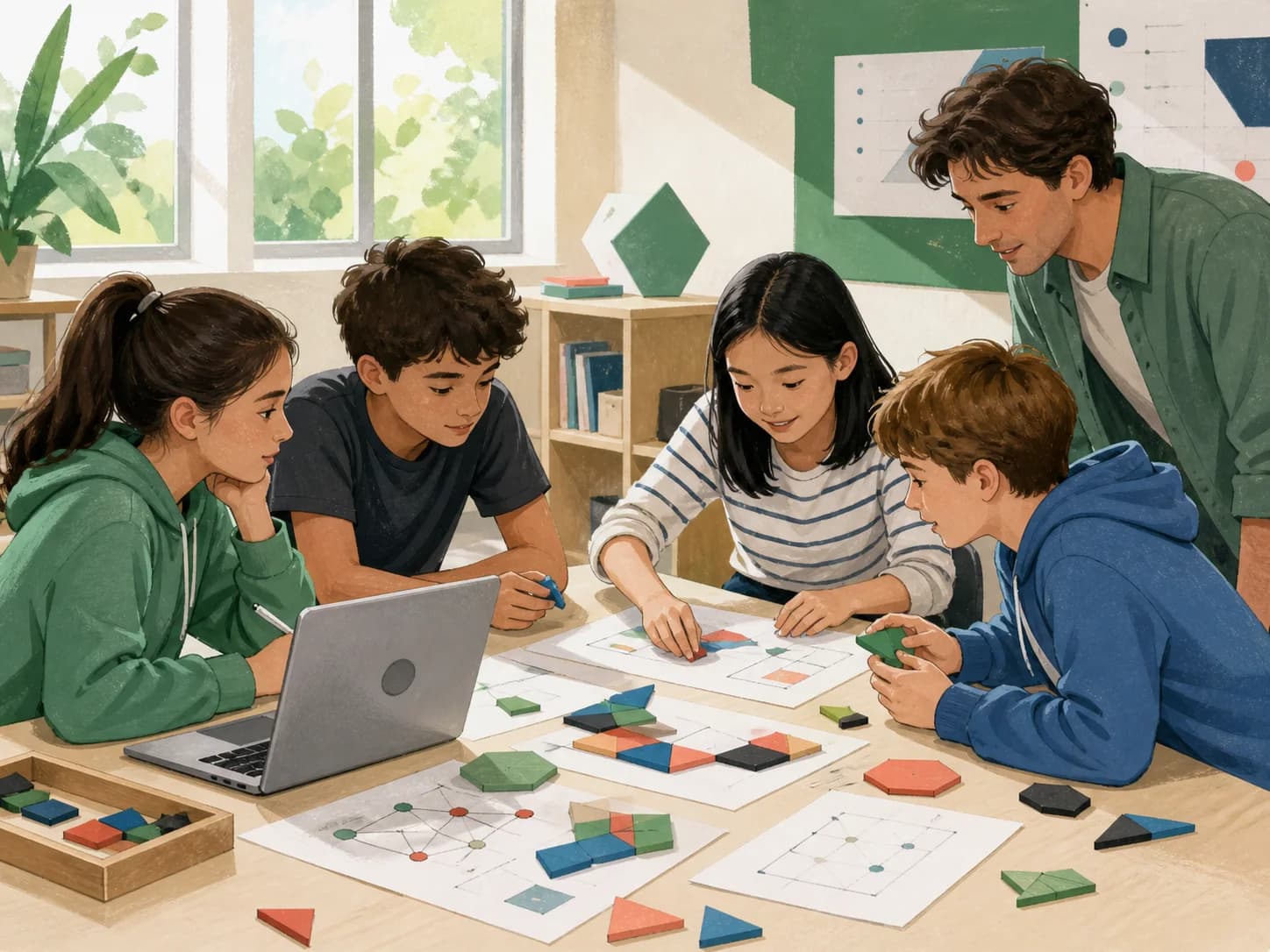
The group is small enough for instructors to know each student's habits and large enough for genuine mathematical discussion to emerge.
Students often work on the same topic at slightly different depths. That keeps the class coherent while still respecting individual pace.
We use discussion to compare methods, sharpen language, and test reasoning. Students learn that mathematics is something to argue through, not just to finish.
Because the group is small, feedback is immediate and specific. Students can fix habits while they are still forming.
Large classes make it difficult to see how a student is actually thinking. The teacher mostly sees outputs: raised hands, final answers, or a small sample of written work. That is not enough for careful training.
In a small group, instructors can move between students, ask short diagnostic questions, and respond to real thought processes rather than to surface performance.
Students usually spend time reading, solving, writing, and then discussing. Sometimes the whole group comes together around a shared obstacle; sometimes each student receives a slightly different prompt or extension. The lesson stays calm, focused, and intellectually active.
That rhythm matters. Students learn to work independently without feeling isolated, and they learn to listen to other approaches without becoming passive.
A strong group gives students more than company. It gives them examples of alternative reasoning, different styles of explanation, and a culture in which serious effort feels normal.
This is especially valuable for able students, who often grow faster when they can compare themselves against thoughtful peers rather than against a worksheet answer key.
Small-group training suits students who benefit from challenge, structure, and conversation. It works especially well for long-term development because it combines accountability with a sustainable classroom atmosphere.
For some goals, one-to-one coaching is the better fit. But for many students, the small group is where rigour and momentum balance best.
A trial lesson helps us understand your child's current level, working style, and the group or pathway that would challenge them best.